
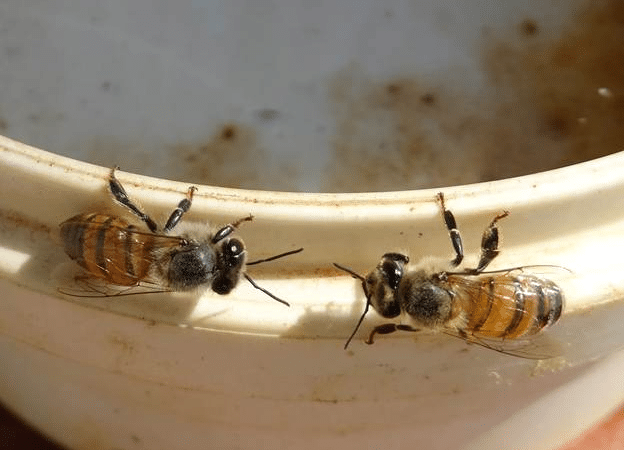
Most gardeners assume the more bees buzzing around, the better, but Africanized bees can do more harm than good. By learning to tell these bees apart and staying safe in the process, you can help the right pollinators thrive in your garden.
Why More Bees Don’t Always Mean Better Pollination
Honey bees are often praised as some of the hardest-working pollinators around, credited with pollinating roughly 80% of all flowering plants. However, Africanized honey bees are aggressive generalists, and their buzzing business can be misleading. They may leave less pollen behind, skip flowers that need special handling and crowd out better-suited bees.
Africanized Bees Pack Pollen Away
Foraging bees rake pollen from their body hairs, then press it into corbicula, or a pollen basket, on each hind leg. This packing lets a bee carry more pollen home per trip. Because Africanized bees forage aggressively and in large numbers, they may haul away much of a bed’s pollen rather than leaving it to brush onto neighboring blooms.
Africanized Bees Don’t Buzz Pollinate
Tomatoes, peppers and eggplants hold pollen tightly inside tube-like anthers that open through a pore at the tip, much like a salt shaker. Only bees that buzz pollinate can shake the pollen loose, using a vibration technique called sonication. Honey bees, including Africanized bees, don’t buzz pollinate, so they may visit those flowers all day and still leave them poorly pollinated.
Africanized Bees Can Crowd Out Better-Suited Bees
A peer-reviewed comparison found that bumblebees removed more pollen, deposited more of it and visited flowers more often than honey bees. This means bumblebees are measurably more efficient pollinators. However, when Africanized bees flood a flower bed, they can crowd out these bumblebees. Africanized bees may swarm up to 16 times in a single year.
How to Tell Honey Bees and Bumblebees Apart
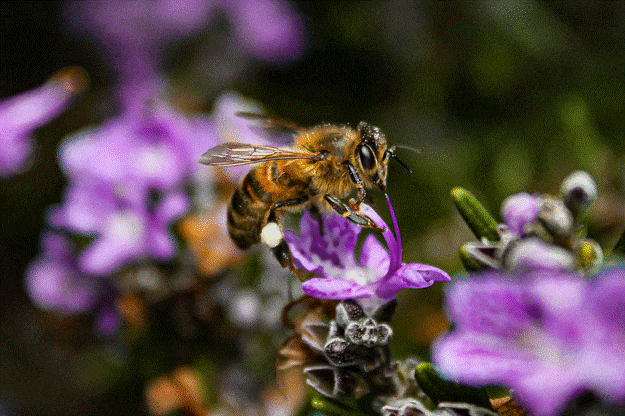
Honey bee image source: https://unsplash.com/photos/honeybee-perched-on-purple-flower-in-close-up-photography-during-daytime-vPpRh0tE_RE
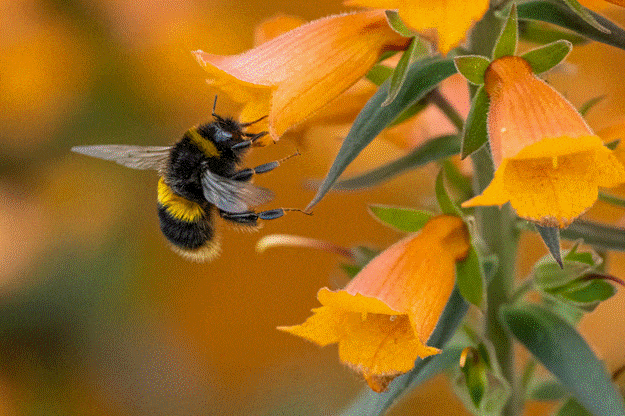
Bumblebee image source: https://unsplash.com/photos/a-bee-on-a-flower-d8aDrWHMYdY
Color is the quickest way to differentiate the bee species. Honey bees show black and orange-yellow stripes, while bumblebees show black and vivid yellow stripes. From there, take a closer look at the fuzz. Both bees are hairy, but bumblebees usually appear noticeably furrier.
Size adds another cue, as bumblebees are generally larger and heavier-bodied, though some can be small. Honey bees tend to sweep from bloom to bloom quickly and in large numbers.
Before you start sizing up visitors, Africanized bees can’t be told apart from other honey bees by sight, and confirming one requires genetic testing in a lab. Rely on colony behavior and a removal professional’s guidance to judge any suspected Africanized nest.
Know the Safety Signs Before Getting Close
Africanized bees are known to be more defensive and aggressive, so you should recognize their warning signs before you step anywhere near a nest. Knowing where colonies turn up and what sets them off gives you a head start on staying clear:
- Where they might nest: Africanized bees will settle into almost any tight, sheltered space, so water meter boxes, utility boxes, cement blocks, old tires, overturned flower pots, hollow tree limbs, house eaves and sheds can all host a colony.
- What triggers a defensive reaction: A modest amount of stimulus, such as sound, vibration or physical disturbance, can be enough to agitate an Africanized colony. Stinging incidents tend to happen when someone disturbs the nest itself.
A threatened colony can send out hundreds or even thousands of bees, so every suspected nest calls for caution. Handling the problem yourself can provoke an attack, which is why the wisest move is to stay at least 100 feet away from any hive you spot and call a removal service.
Help Your Garden’s True Pollinators Thrive
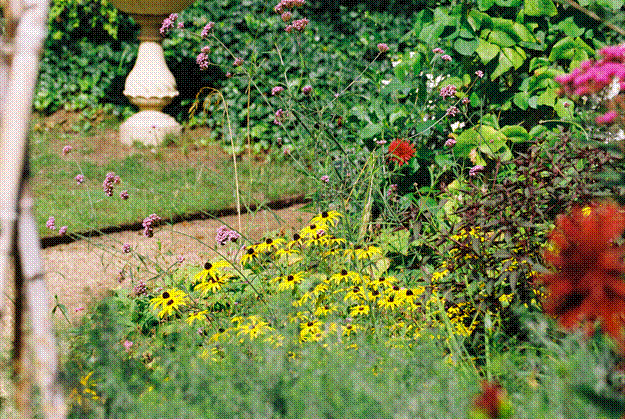
Pollinator garden image source: https://unsplash.com/photos/yellow-daisies-and-purple-garden-flowers-snik4NMcZ5M
A few simple steps can support the bees that do the most good in your yard:
- Plant a variety, in succession: Choose native flowers with staggered bloom times, so something is always flowering from spring through fall. Different bee species are active at different points in the season, and native plants are typically better adapted to support them than ornamentals.
- Leave some ground undisturbed: About 70% of native bee species nest in the ground, so bare, sunny patches of soil give them a place to raise their young. Choose a well-drained spot near your flower beds and keep it clear of digging and foot traffic.
- Hold off on pesticides during bloom: Try to avoid spraying during bloom or in the middle of the day, since bees are most active and most exposed then. Use pesticides only when you truly need them. If a plant requires treatment, wait until its flowers fade before you apply anything.
- Go easy on dead wood and stems: Many wild bees nest in dead wood or hollow stems. Leaving some natural debris, such as stumps or brush piles, supports cavity-nesting species. Skip the fall cleanup in one corner of your yard and let spent perennials and grasses stand through winter.
- Give bees a place to drink: Set out a shallow dish filled with pebbles and water, so bees have an easy spot to land and get a drink without the risk of drowning. Remember to drain and refill it every few days to keep it from becoming a breeding ground for mosquitoes.
While you’re making your yard more inviting to native pollinators, you can also make it less inviting to Africanized bees. Regularly inspect your property for unusual bee activity, especially from March through July, when swarming is most common.
Seal gaps larger than 1/8 inch around walls, chimneys and plumbing, and install fine screens over openings like water meters, utility boxes and rain spouts. Removing these potential nesting spots can clear the way for the ground-nesting and cavity-nesting bees that you want to attract.
Letting Your Garden Thrive on Its Own Terms
You don’t need to fear every bee buzzing through your garden, and you definitely don’t need more of them to get better results. Once you can recognize the warning signs of an Africanized colony, you can better make room for the bees doing the pollination work and better support your garden.
The header image source: Africanized bees image source: https://unsplash.com/photos/a-couple-of-bees-sitting-on-top-of-a-white-bowl-s-DWKGRyFUM
| Written by: Grace Waters Senior Editorgrace@environment.co Subscribe to our newsletter! |
